Academic articles and public writing projects.
Peer-Reviewed Scholarly Articles
-

Locating a Sentido de Lugar: Community Writing as Geographic Method (In press, 2026)
Author(s): Kaily Heitz (Department of Geography, UCLA) and Elybeth Sofia Alcantar
ACME: An International Journal for Critical Geographies
-
‘That was their idea, to exterminate us’: Mixteco politics and desire reshaping the sites of the Nochixtlán Massacre of 2016 (2026)
Author: Elybeth Sofia Alcantar
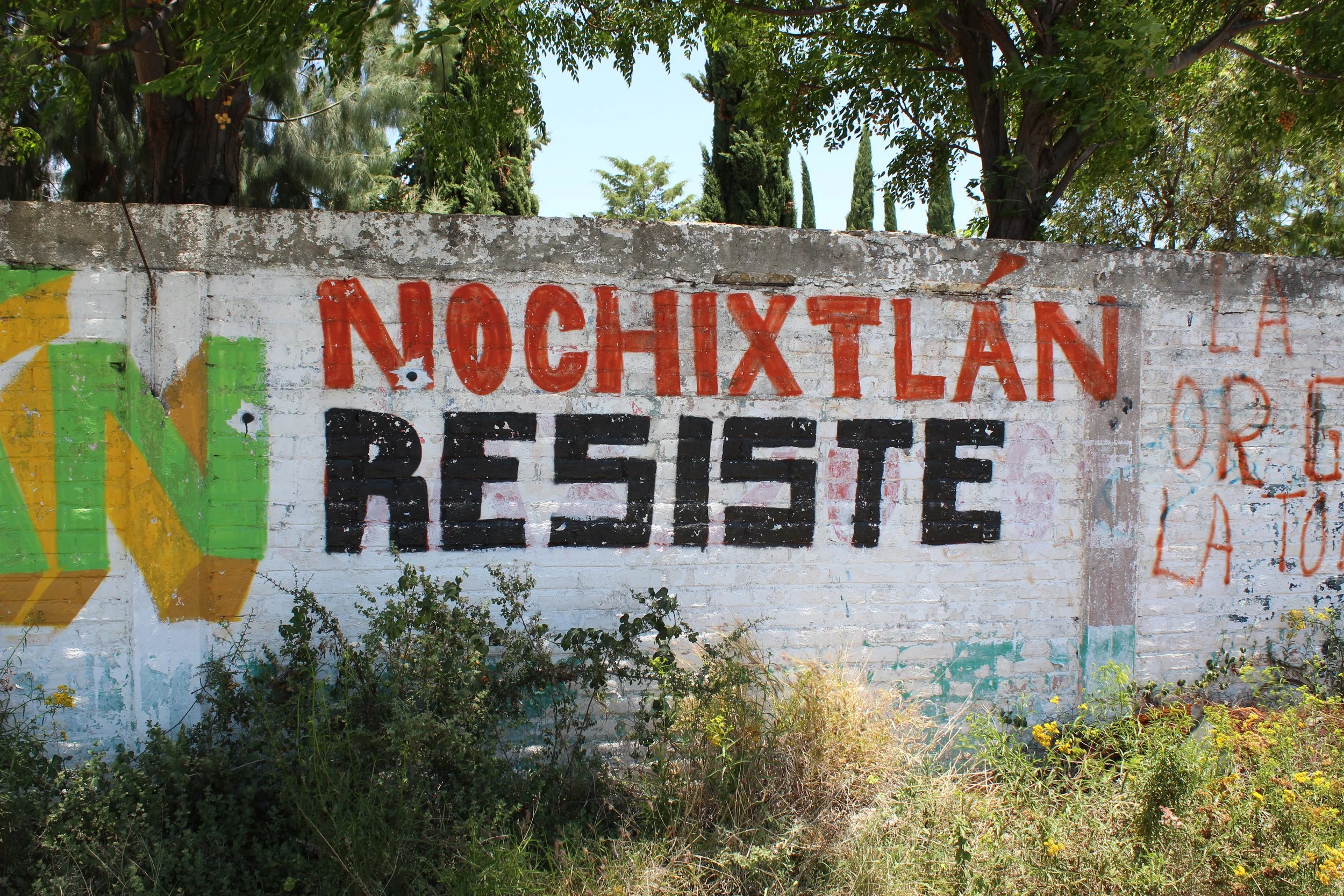
This article centers Indigenous cultural geographies by highlighting the politics of usos y costumbres (Indigenous governance) as the binding force for the placed-based solidarity that emerged in the wake of the Nochixtlán Massacre of 2016 in Oaxaca. This organized spatial solidarity rooted in Mixteco politics transformed the site of a state-sanctioned massacre to a liberatory place. Through salient narratives of impacted teachers and Mixteco community members at the forefront of the assault, as well as photographic imagery of the remnants of the massacre enacted by the Mexican Federal Preventive Police (FPP), I demonstrate the transformations of place from a ‘geography of terror’ to a liberatory site informed by Indigenous desire. Specifically, a place where Mixtecos and Sección 22 teachers facilitated a spatialized solidarity through usos y costumbres to establish organized blockades and tactics of territorial defense. Mixtecos and Sección 22 now evoke sites of the Nochixtlán Massacre as places of liberation, where they overcame the FPP. This article extends discussions in Indigenous geographies and feminist theories of engagement of place, by specifically bringing into frame the placed-based solidarity through coalitional support between Sección 22 teacher syndicate and Indigenous Mixtecos. Through the temporal moments of abolishment of FPP from the landscape and the memorials and murals left across Nochixtlán, Mixtecos bring forth a transformation of place that center Indigenous livingness and desires for just futures.
-
Indian Time, Walking as Mapping, and Decolonial Methodologies in Mixteco Geographies (2025)
Author: Elybeth Sofia Alcantar
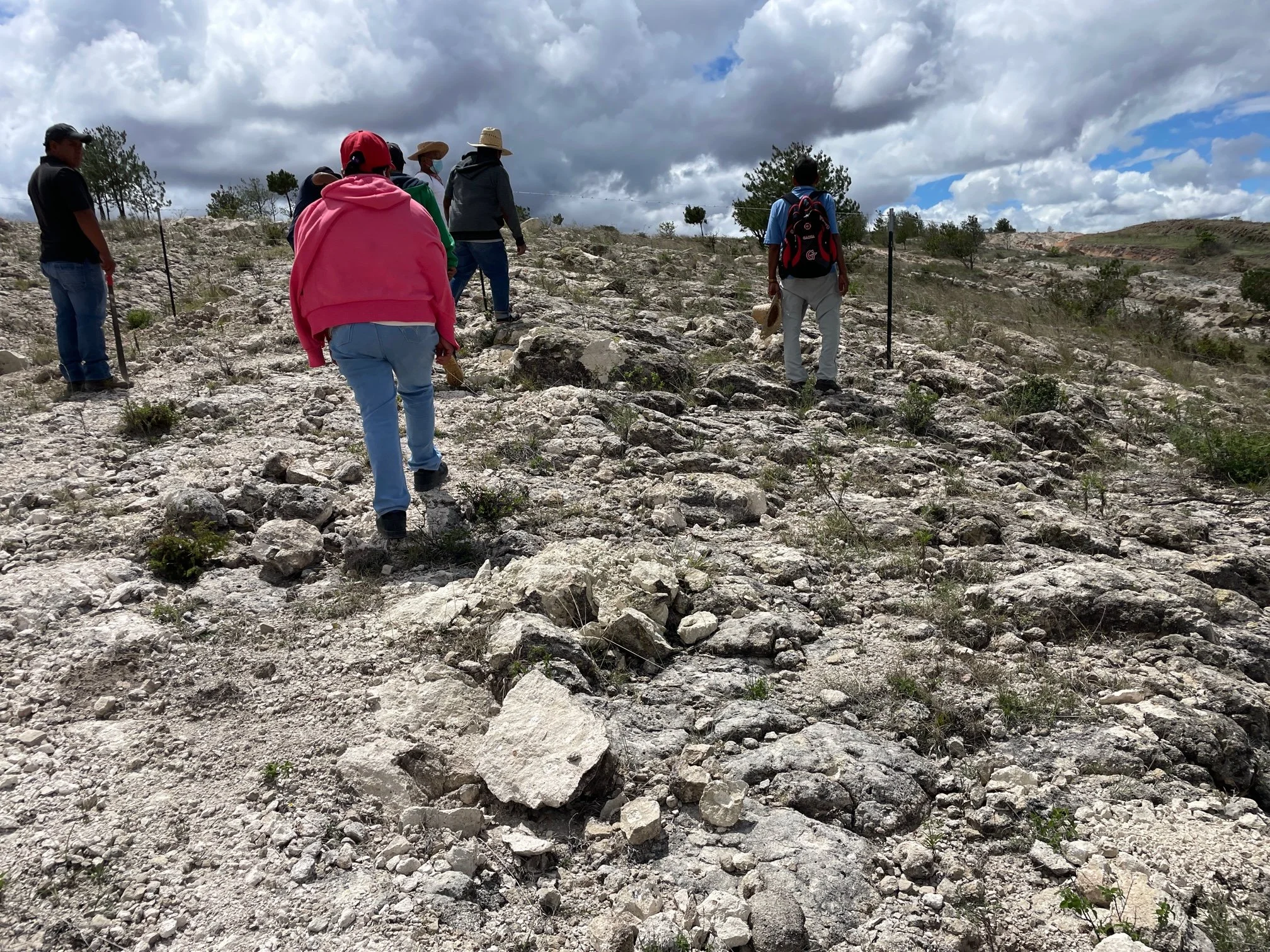
There has been an emerging shift by Indigenous geographers and non-Indigenous researchers to integrate decolonial methodologies into research protocols to challenge the Western Cartesian production of geographic knowledge across Native and Indigenous geographies. The commitment of geographic research with Indigenous communities must be to engage in a methodology guided by Indigenous temporality and Indigenous autonomous governance structures that allow the emergence of decolonial possibilities. This article extends the use of a decolonial research approach with Indigenous communities by applying it to Oaxaca, Mexico, in an Indigenous Mixteco municipality. I use a series of salient narratives from my field work in the summer of 2022 in a pueblo Mixteco to inform a decolonial method that engages with Indigenous normative governance structure (Altamirano-Jimenez Citation2020), “Indian time” (Blackwell Citation2023a) or Indigenous temporality (Curley and Smith Citation2024), and walking as map-making (Sletto et al. Citation2021) to suggest a decolonial Mixteco methodology with pueblos Mixtecos of Oaxaca, Mexico. I suggest that it is our responsibility as researchers, whether Indigenous or non-Indigenous, to uphold Indigenous governance across these differing temporalities and geographies, even once we leave the “field site” when dependent on Western academic timelines.
-
Unforgetting place: The urgency of becoming a Mixteca geographer (2023)
Author: Elybeth Sofia Alcantar
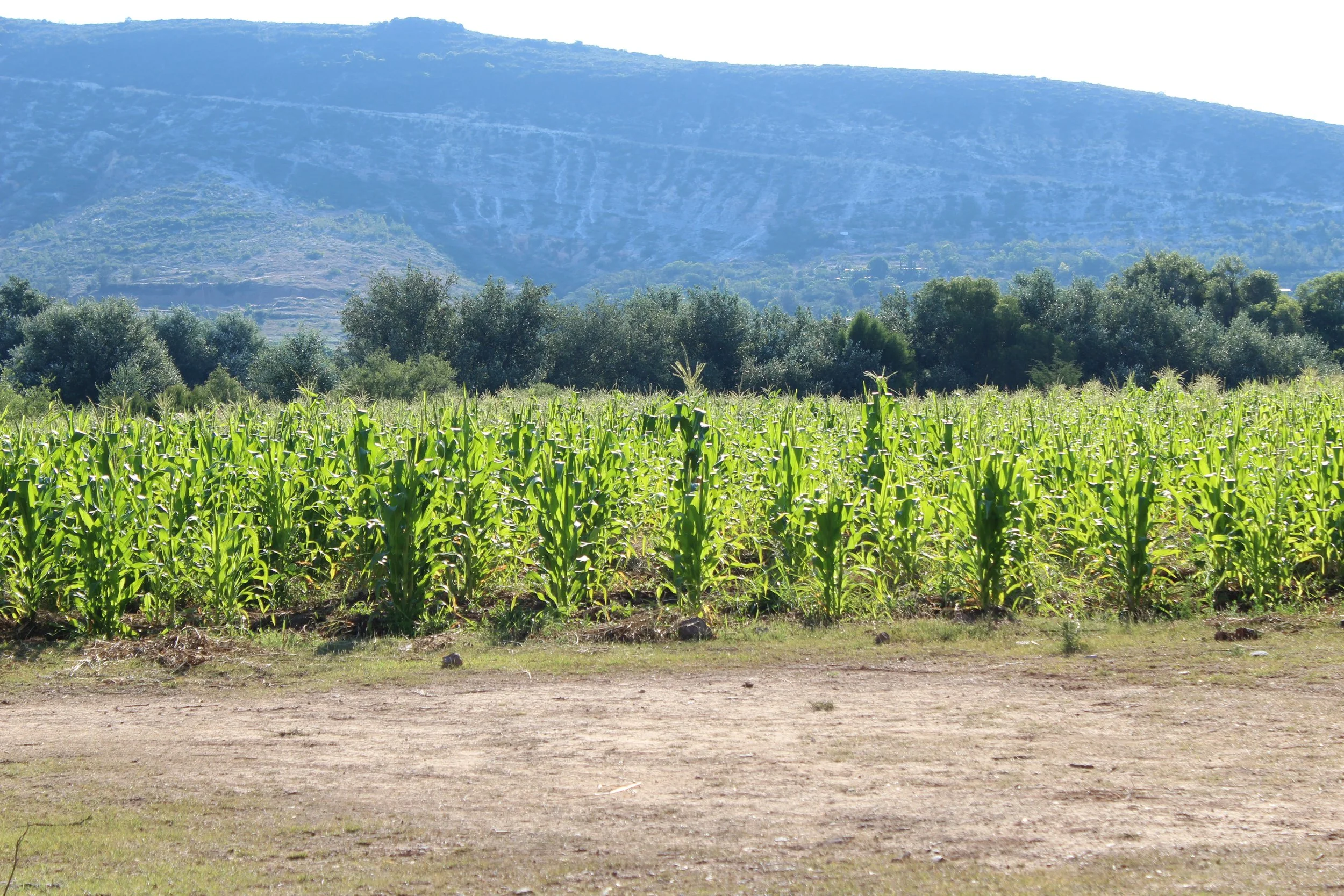
Ñuu ku meeí Yucu Nduchi. For the past several years, when introducing myself, I have made the decision to also invoke my community, the Mixteco (Ñuu Savi) pueblo of San Mateo Etlatongo (Yucu Nduchi), located in the Mixteca Alta region of Oaxaca, Mexico. This invocation marks my direct lineage to a pueblo Mixteco, and my deep attachments to this place. I interweave this vivencia with Roberto Lovato’s (2020) concept of unforgetting, as uncovering truth to understand history of our communities of origin as deeply entrenched in our own experience of self and being. This is especially useful for those of us in the diaspora who have limited to no recollection of the earth where our parents were born, that holds memories of their lives—yet, we still have a responsibility to a place from which we are distant. In this article, I explain how I embarked on following my family’s history migrating from their pueblo Mixteco after I witnessed the antecedents of the Nochixtlán Massacre of 2016 in Oaxaca. This massacre of eight Mixteco civilians by the Mexican Federal Preventive Police (FPP) (Hernández Navarro 2019) occurred seven kilometers from my pueblo on 19 June 2016. I position my unforgetting of indigeneity, place, and relationality to the Mixteca region of Oaxaca as an urgent motivator to become a geographer. I propose that by becoming a Mixteca geographer I will intervene in the field of critical Latinx indigeneities by providing a feminist and Indigenous geographic lens to understand the embodied experiences and the effects that forced displacement has on us, Mixtecos of Oaxaca, that requires unforgetting.
Public Writing
-
Mexicans Demand a Complete Break with Israel (2025)
Author: Elybeth Sofia Alcantar
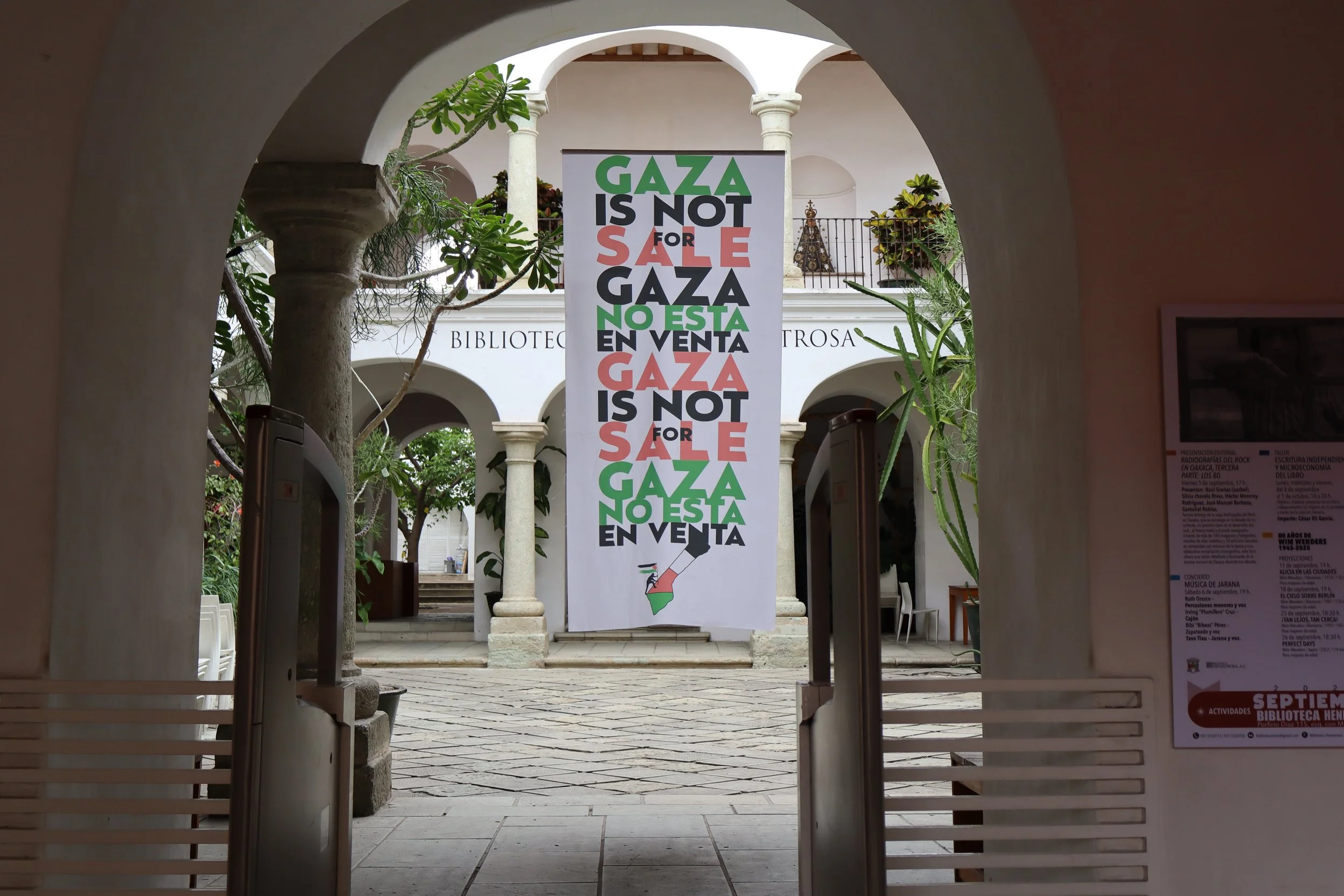
As the country’s progressive government drags its feet, the demand to end political and economic relations with Israel is an ever-growing movement.
-
Water Is Life—from Standing Rock to Oaxaca’s Mixtecan Highlands (2023)
Author: Elybeth Sofia Alcantar
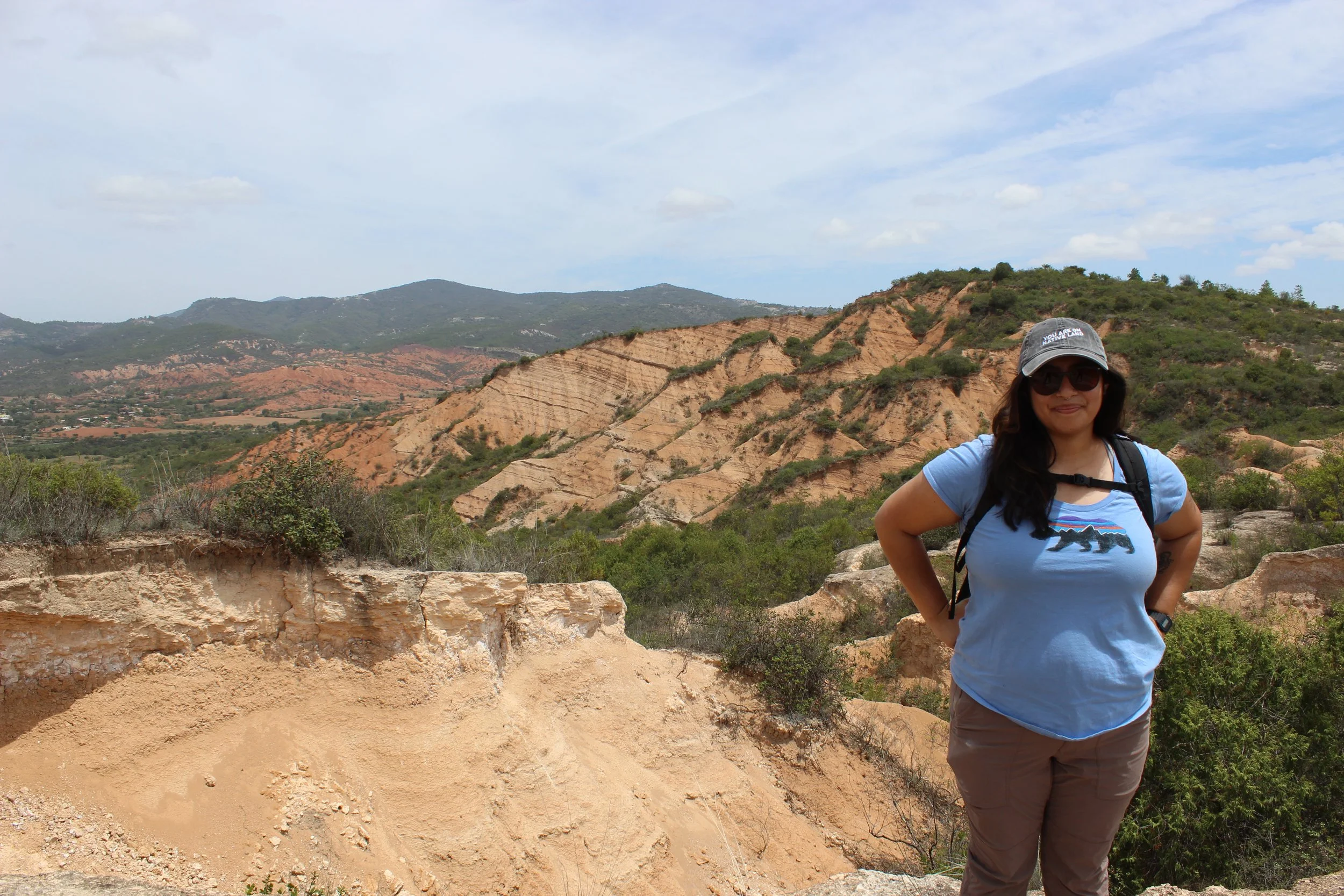
A geographer sees a familiar pattern of government-backed energy projects devastating Indigenous communities and violating tribal sovereignty.
-
Sembrando Vida in a Mixtec Village in Oaxaca, Mexico (2021)
Author: Elybeth Sofia Alcantar
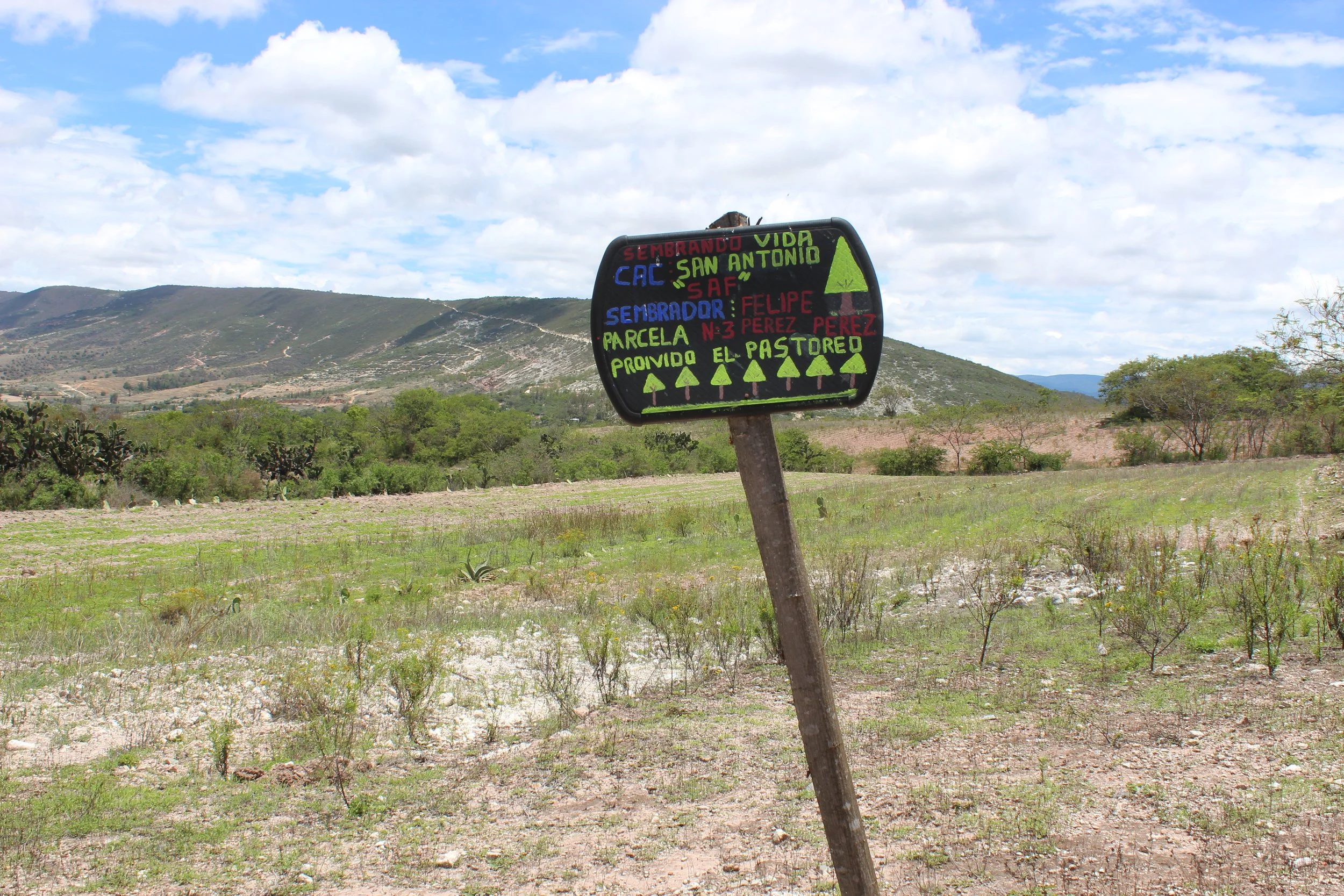
Seeking to bring a new vision of sustainability and development to rural communities of Mexico, the Secretariat launched the Sembrando Vida project to mitigate rural poverty and environmental degradation (SEB, 2020). To participate in Sembrando Vida as so-called sembradores (planters), individuals must be above the age of eighteen, live within a rural village, and possess 2.5 hectares of land that can be used for agricultural productivity (SEB, 2020). The land is assessed for its potential to recuperate biodiversity; to what extent the soil is eroded or if there is a loss of vegetation due to erosion; if it can be reconverted to corn, avocado, and other agriculturally productive plants; and if it has been disturbed by environmental disasters, plagues, or diseases (SEB, 2020). Sembrando Vida began its program in Oaxaca, including in the Mixtec village of San Mateo Etlatongo, in the early months of 2020. In 2021, the national government released a report on the Sembrando Vida project in Etlatongo where they listed a total of twenty-nine sembradores, including eleven women and eighteen men (Lopez Obrador, 2021).
Master’s Thesis
-
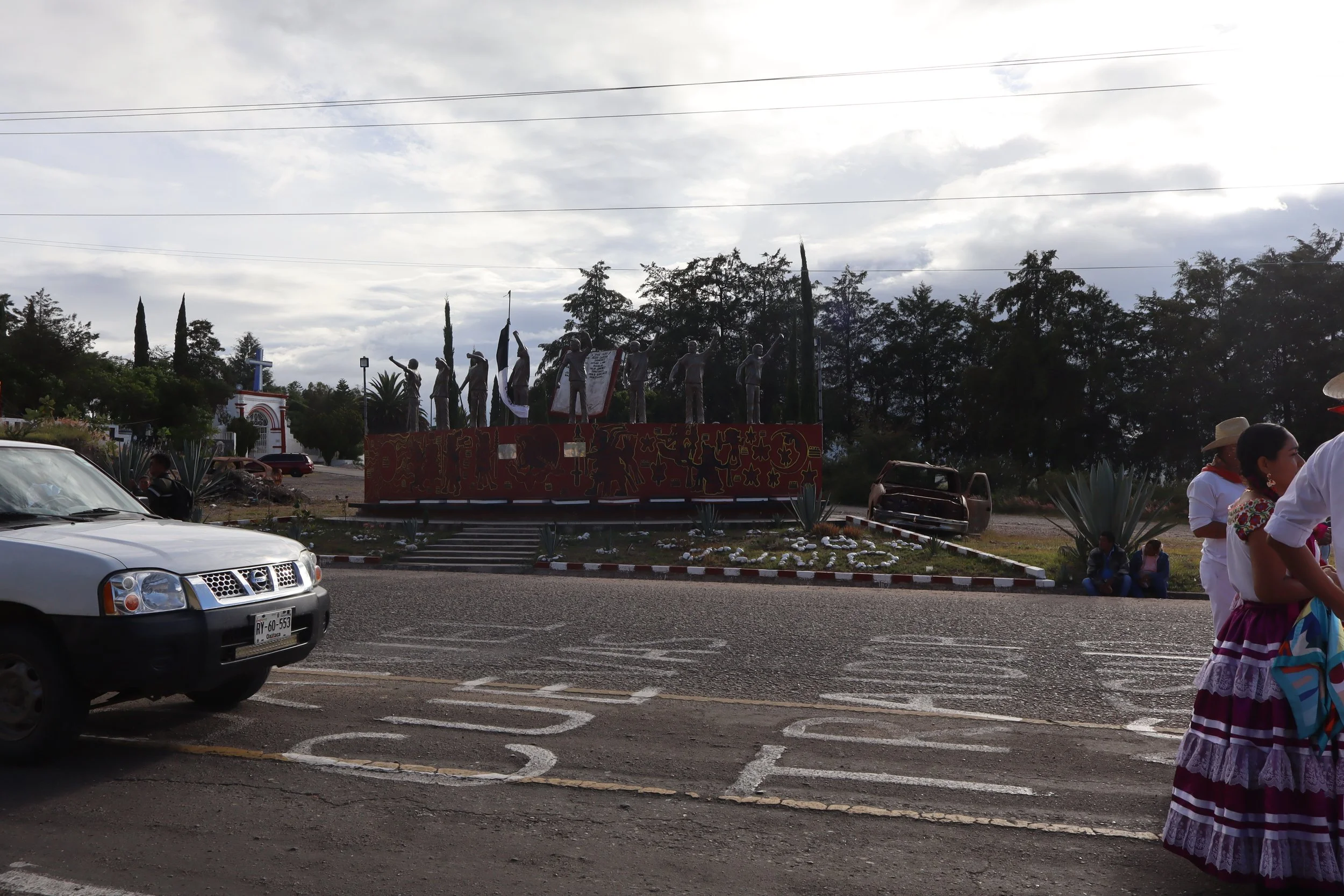
Memoria mixteca: Memory as a geography of resistance in mixteca alta of Oaxaca, Mexico
Indigenous geographies are often limited to topography and the spaces in which indigenous migrants’ traverse to the United States without analyzing memory and the negotiation of geographies that transcend topography. Mixtec indigenous geographies do not solely exist in and between spaces of migration but also are inclusive of the violent confrontations that occur on their terrains; these violent acts are embedded in the memories of such conflicts amongst Mixtecs in Oaxaca, their diaspora, and Mixtec community members. Through memories of violent conflicts with the Mexican government, and the collective solidarity formed to resist state repression, the Nochixtlán Massacre of 2016 in the Mixtec region of Oaxaca provides the ability to understand Mixtec geographies as more than terrains of migration. Through in-depth qualitative ethnographic interviews of teachers of the Sección 22 teacher’s union of the Mixteca Alta region of Oaxaca, and Mixtecs in the region as well as their diaspora, I demonstrate how Mixtec geographies expand into Mixtec collective memory, which form new terrains to resist state sanctioned violence and repression. The Mixtec indigenous peoples of the Mixteca region of Oaxaca, Mexico are engaging in place making as indigenous Mixtecs on the sites of the Nochixtlán Massacre of 2016, successively morphing their terrains as geographies of resistance despite state sanctioned police violence. their ideas of landscape beyond the topography and to encompass memory as a space of geography, within indigenous landscapes.